2025 © Tommaso Gioia - All Rights Reserved
 |  |  |  |  |
|---|---|---|---|---|
 |  |  |  |  |
 |  |  |  |  |
 |  |  |  |  |
 |  |  |  |  |
 |  |  |  |  |
 |  |  |  |  |
 |  |  |  |  |
 |  |  |  |
BORDERLIVES
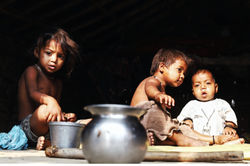
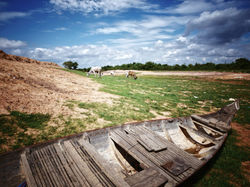
Often, what lies outside official locations, certified accounts, and international narratives is forgotten—left in a dimension that refers only to itself, excluded from the passage of time and the transformation of space. In this state of struggle and abandonment, many people attempt to flee their homelands due to violence, persecution, or war. A journey that may have begun years earlier, perhaps destined to last forever—without ever being able to arrive at a place that can truly be called home.
Approximately 78% of refugees live in urban areas, often forced into slums or collective shelters under extremely precarious conditions. Over four million refugees worldwide reside in organized camps—structures capable of housing hundreds of thousands of displaced people—designed to provide immediate protection and meet their basic needs. In these camps, where refugees may remain for years or even decades, educational services are offered to promote self-sufficiency, and inhabitants produce essential goods to sustain a life of dignity.
Yet the dozens of refugee camps scattered around the globe, instead of being spaces of welcome and protection, often turn into cages, surrounded by long lines of barbed wire. Freedom is denied to such an extent that one can leave the camp only for urgent medical reasons. Refugees are not only physically and spatially confined; a profound distance is imposed between them and the rest of the world—an immoral gap, suspended between common sense and paradox, between reason and a sense of shame.
This reportage seeks to bear witness to the abandonment and neglect that refugees unjustly endure—individuals who no longer belong to anything, stripped of identity, roots, and future, reduced to inhabitants of a “non-place.”